The wheel hub is one of the highest-volume safety-critical parts a car or motorcycle plant makes. This guide covers the full machining process, the tolerances and surface finish that actually matter, aluminium versus cast-iron hubs, fixturing for volume, and the single decision that moves cost the most — a dedicated hub center versus a general-purpose VMC.
What is wheel hub machining? Wheel hub machining is the CNC process of turning, milling, drilling and tapping a forged or cast hub blank into a finished wheel hub — machining the mounting flange, bearing bore, pilot (spigot) diameter and bolt-hole pattern to tight tolerances and a controlled surface finish. Because the hub carries the vehicle's load and braking torque, accuracy and run-out directly affect safety, NVH (vibration and noise) and tyre wear. In high-volume automotive and motorcycle production, hubs are run on a dedicated wheel-hub machining center configured to the hub geometry rather than a repurposed general-purpose machine.
A wheel hub looks like a flange with holes. The difficulty is that several of its features must hold tight, interacting tolerances at high volume, shift after shift, without drift.
The bearing seat and pilot (spigot) diameter set how the wheel and bearing locate. They demand tight diameter and roundness tolerances and a controlled surface finish — get this wrong and you get run-out, vibration and premature bearing wear.
The flange face the brake disc and wheel bolt against must be flat and square to the bore. Lateral run-out here is a leading cause of brake judder, so the face is often finish-machined in the same setup as the bore to keep them true to each other.
The stud or bolt holes — the pitch circle diameter — must be positioned accurately and consistently. On a dedicated center these are drilled and tapped in one setup, holding position while the cycle stays fast.
The exact routing depends on the hub design, but a typical high-volume sequence looks like this:
The throughput question is how few setups you can do this in. Every re-clamp adds time and a fresh chance to lose accuracy. A machine built around the hub collapses these steps into the fewest setups, which is exactly where cycle time is won or lost.
Common on passenger cars and motorcycles for weight. Aluminium machines fast and favours high spindle speed for surface finish, but it is less forgiving on built-up edge and chip control. The priority is rpm, sharp tooling and good swarf evacuation.
Common on trucks, commercial vehicles and brake-integrated hubs. These need spindle torque and rigidity more than headline rpm — the cut is heavier and the machine has to stay stiff and thermally stable to hold tolerance over a shift.
A hub line is rarely "just rpm" or "just torque." A specialty center is configured to your specific hub and material — spindle, fixturing and cooling matched to the cut — rather than compromised to cover every job like a general machine.
Should I machine wheel hubs on a dedicated center or a general-purpose VMC? It comes down to volume and mix. While your volume per hub is moderate or your part mix is varied, a general-purpose VMC is the flexible, cost-effective choice. But once a single hub runs in high, stable volume on a fixed line, a dedicated wheel-hub center pays for itself in cycle time: its fixturing, spindle and axes are optimized for hub geometry, so tool paths are shorter and setups fewer. The HALLERBS HL-666 delivers up to a 35% cycle-time reduction versus a standard VMC on the same hub. On a high-volume line, that 35% is more parts per shift in the same floor space — the difference between adding a machine and not. For the full parts-per-shift math, see dedicated wheel-hub center vs general-purpose VMC.
When you evaluate a wheel-hub machining center, these are the specifications that actually move parts-per-shift and scrap rate:
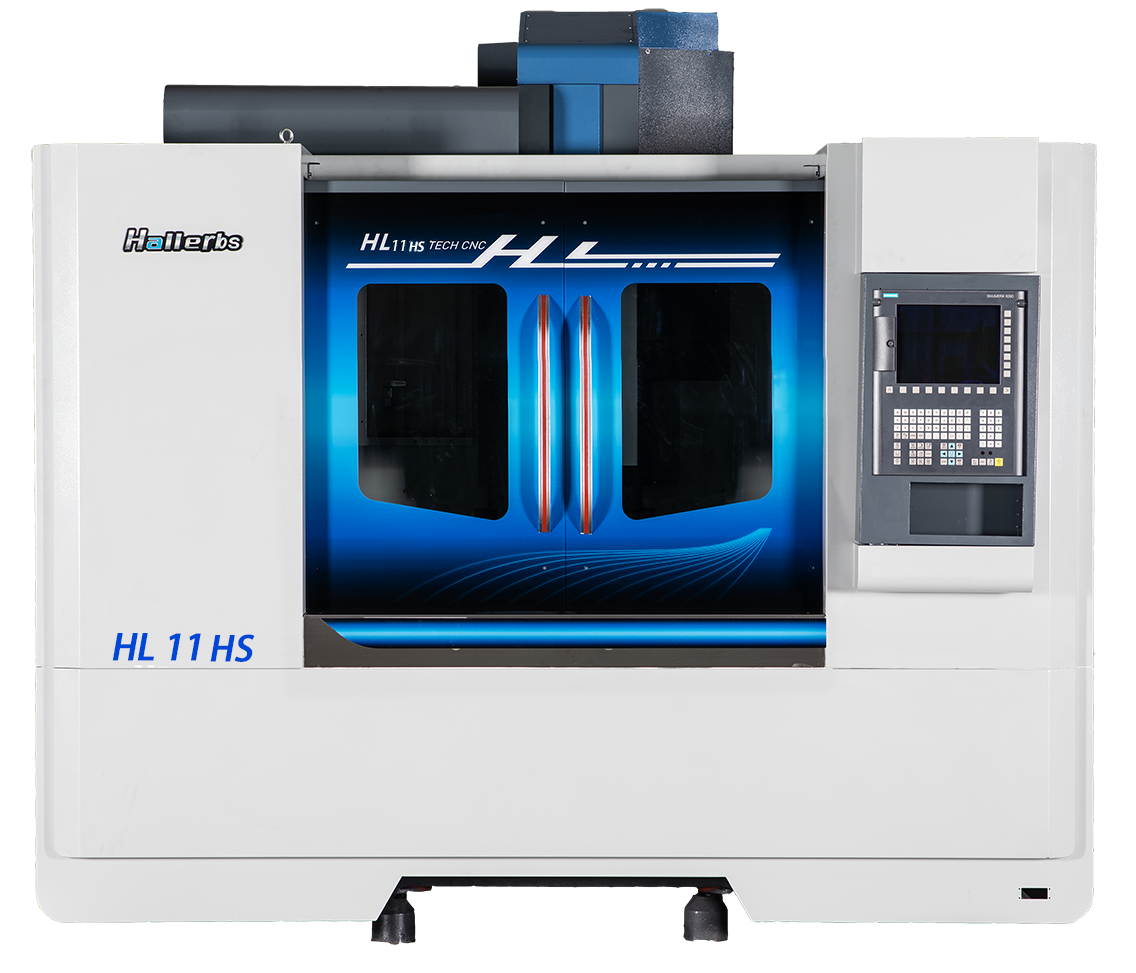
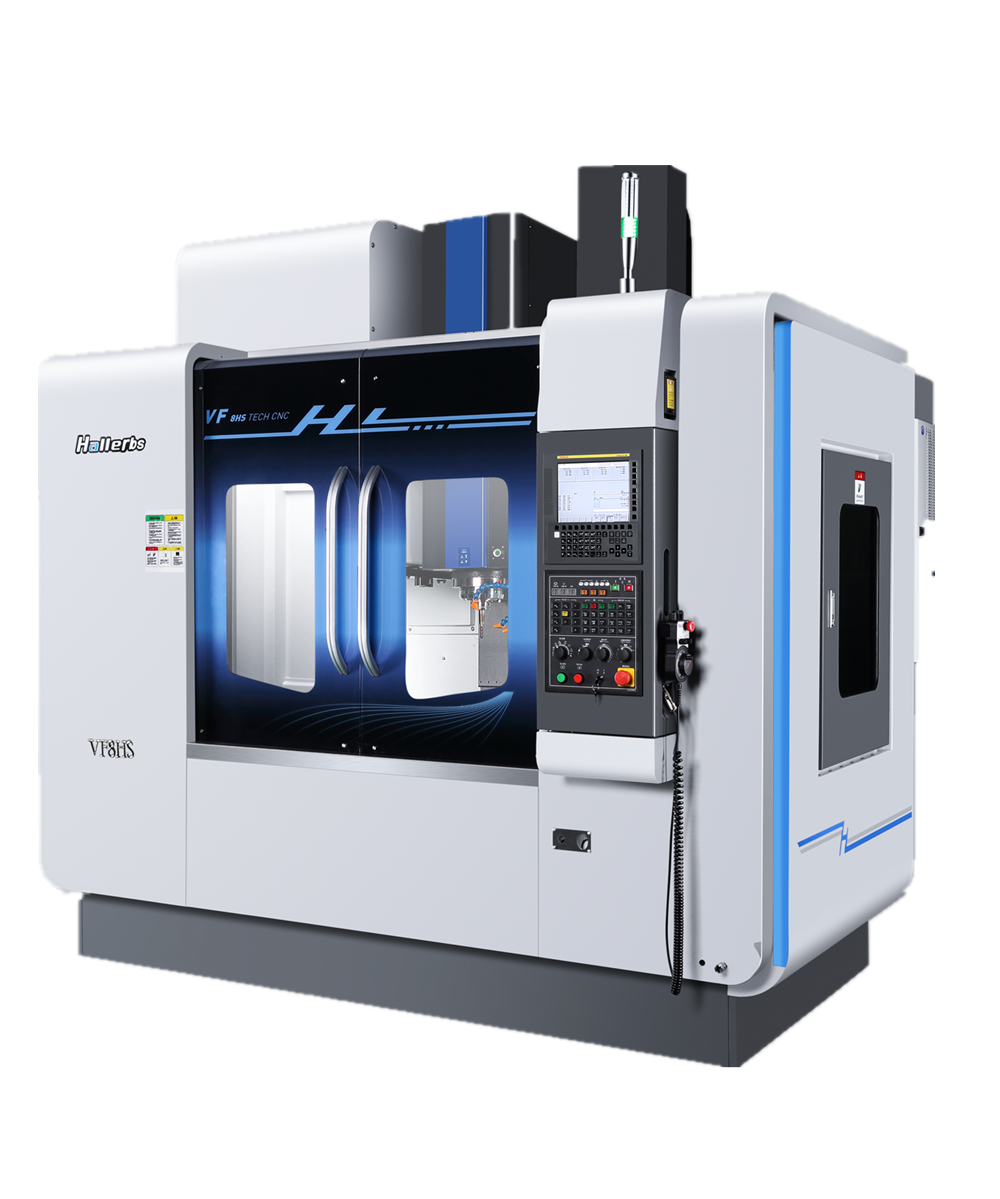
The HALLERBS HL-666 is a specialty CNC center configured to hub geometry, engineered to run a high-volume line around the clock — built on the same flagship platform with German design and process and a 14-point precision inspection on every machine.
Hollow oil-cooled ballscrew · four independent cooling systems · FEM-analyzed high-rigidity casting · single / twin-spindle configurations · Siemens, FANUC or Mitsubishi control · continuous-line / 24-7 capable.
The case for a dedicated approach is not theoretical. Across documented production lines, HALLERBS specialty machines replaced imported equipment and the gains were measured on the same parts — for example, on a large automotive structural part a HALLERBS machine cut cycle time from 11m 31s to 9m 25s (~18%) versus the machine it replaced. See the full set of production case studies, including the large structural-part case.
What about brake discs and rotors? Brake discs share the hub's core demands — flatness, parallelism and run-out on a rotational part at high volume — so the same dedicated approach applies. The HL-666 platform machines brake discs and rotors alongside hubs, which is why many integrated hub/disc programs standardize on one specialty line. If you run hubs and discs together, tell us both — there are real savings in machining them on a common platform.
What machine is best for high-volume wheel hub machining? For high, stable volume on a fixed hub, a dedicated wheel-hub machining center configured to the part — its fixturing, spindle and axes are optimized for hub geometry, giving shorter tool paths and fewer setups. The HALLERBS HL-666 delivers up to a 35% cycle-time reduction versus a standard VMC on the same hub. For varied, lower-volume work, a general-purpose VMC stays more flexible and cost-effective.
How much faster is a dedicated hub center than a VMC? Up to 35% on the same hub, by shortening tool paths and cutting setups. On a high-volume line that converts directly into more parts per shift in the same floor space.
What accuracy does wheel hub machining require? The bearing bore, pilot and flange face carry tight, interacting tolerances on diameter, roundness, flatness and run-out. The HL-666 holds 0.006 mm positioning accuracy to VDI 3441, with thermal stability so the first and ten-thousandth hub stay in tolerance.
Can one machine handle both aluminium and cast-iron hubs? A specialty center is configured to your hub and material — high rpm for aluminium finish, torque and rigidity for cast iron and steel. Send your specific hub and material and our engineers will spec the right configuration rather than a one-size compromise.
Do you support installation and training overseas? Yes. HALLERBS provides pre-sale solution design, on-site installation and commissioning, operator and programming training, genuine spare parts and remote diagnostics. See Service & Support.
Send your hub drawing, target cycle time and annual volume. Our engineers will propose the right HL-666 configuration and a quotation — or ask the assistant in the corner.